
Views: 0 Author: Site Editor Publish Time: 2025-07-07 Origin: Site
Looking for the fastest way to unclog a kitchen sink? Here are the top methods to clear a clogged kitchen sink:
Pour boiling water directly into your kitchen sink drain.
Use a combination of baking soda and vinegar in your kitchen sink.
Try a plunger to unclog your kitchen sink.
If needed, snake the kitchen sink drain.
Remember to stay safe! Always wear gloves and never mix chemical cleaners in your kitchen sink. If you can't unclog your kitchen sink or notice water backing up, it's time to call a plumber. Most kitchen sink clogs can be fixed at home. Let's discover the best way to unclog your kitchen sink together. If you're wondering how to unclog a kitchen sink, you're in the right place!
Most kitchen sink clogs happen because grease, food scraps, and other debris build up inside pipes over time.
You can spot a clog early by slow draining water, bad smells, gurgling sounds, or water pooling in the sink.
Try simple methods first like pouring boiling water, using baking soda and vinegar, or plunging to clear clogs safely.
Regularly clean your sink drain, avoid pouring grease down the drain, and use a sink strainer to prevent clogs.
Call a plumber if clogs persist, water backs up in other drains, or you notice bad smells and leaks to avoid bigger problems.
You might wonder why your kitchen sink clogs so often. It happens more than you think! Most clogs start when things go down the drain that shouldn't. Grease and food oils cool and harden inside pipes. They trap crumbs and other debris. Over time, this sticky mess narrows the pipe and causes a clogged sink. In fact, almost half of plumbing calls come from grease blockages.
Here are some of the most common reasons for a clogged kitchen sink:
Grease, fats, and cooking oils solidify and stick to pipe walls.
Pasta and rice swell up when wet and block the drain.
Coffee grounds clump together and create stubborn clogs.
Egg shells, fruit pits, and bones can't break down and get stuck.
Fruit stickers and plastic bits catch on rough spots inside pipes.
Soap scum builds up, especially if you have hard water.
Non-septic-friendly items like paper towels or wipes cause blockages.
Hair sometimes mixes with soap and food, making a tangled mess.
Bacteria also play a big role. They form slimy biofilms inside pipes. These biofilms trap even more food and grease, making a clogged sink drain worse. Your kitchen sink stays moist and full of organic matter, which helps biofilms grow fast.
Tip: Never pour grease or oil down your kitchen sink. Wipe pans with a paper towel and toss it in the trash instead.
You can spot a clogged kitchen sink before it gets really bad. Watch for these early warning signs:
Water drains slowly or pools in the sink.
Standing water appears in the sink or dishwasher.
You smell foul or sewage-like odors from the drain.
Gurgling noises come from the pipes after you use water.
Food debris or dirty water lingers in the sink.
Brown stains show up around the drain or pipes.
Fruit flies gather near the sink, drawn by decomposing food.
Water sometimes flows up instead of down the drain.
Dishwasher water backs up into the sink.
If you notice any of these, you probably have a drain clog starting to form. A slow draining sink means it's time to act. Catching these signs early can help you avoid a full-blown clogged sink. Regular checks and good habits keep kitchen sink clogs away.
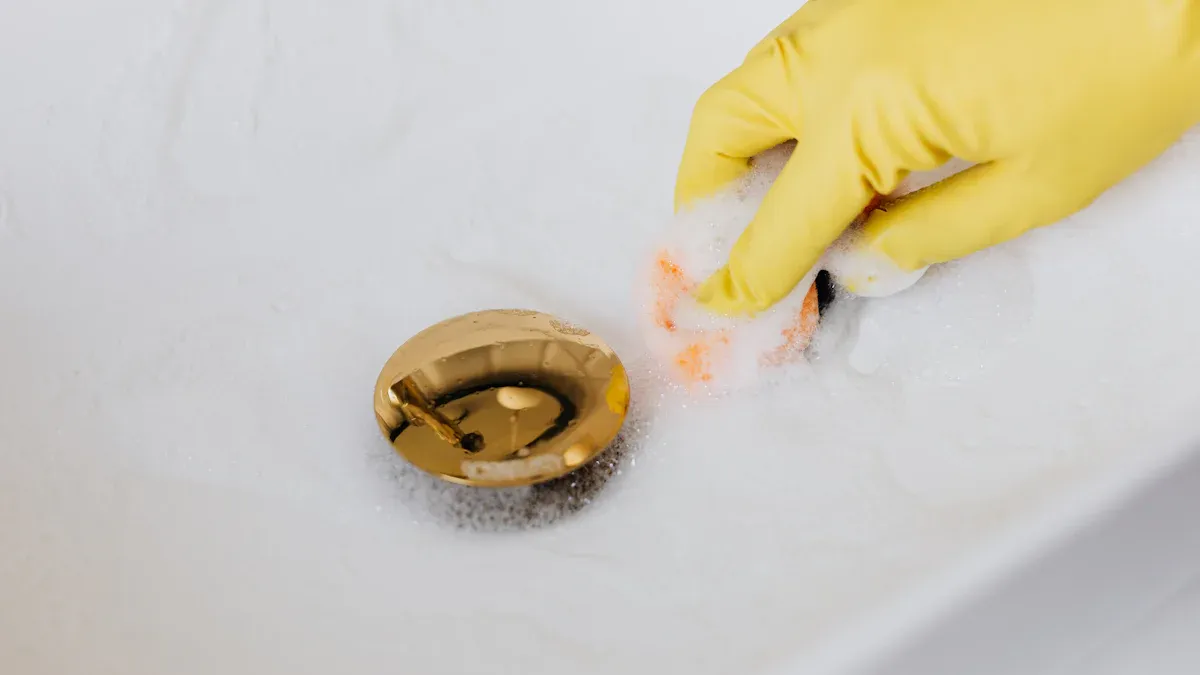
Start by taking out any water sitting in your sink. Use a cup or small container to scoop it into a bucket. This step matters because it lets you create a strong vacuum seal when you use a plunger later. If you skip this, the plunger cannot work well. Removing standing water also helps you see what you are dealing with and keeps things less messy.
Tip: Wear gloves to protect your hands from dirty water and sharp objects.
Boiling water works great for small clogs made of grease or soap. Heat a kettle until the water boils. If your pipes are metal, pour the boiling water straight down the drain in slow, steady streams. If you have PVC pipes or you are not sure, use the hottest tap water instead. Boiling water can melt grease and wash away soft blockages. This method is quick and easy, but it may not work for tough clogs.
Note: Never use boiling water if you have PVC pipes. It can damage them if the temperature goes above 175°F.
This classic method uses a fizzy reaction to break up clogs. Here is how to unclog a sink using baking soda and vinegar:
Step | What to Do |
|---|---|
1 | Pour 1/2 cup to 1 cup of baking soda into the drain. |
2 | Add 1 cup to 2 cups of vinegar (a 1:2 ratio works best). |
3 | Quickly cover the drain with a rubber stopper or a wet cloth. |
4 | Wait 10-15 minutes for the fizzing to stop. |
5 | Flush the drain with hot or boiling water. |
The bubbling helps loosen food, grease, and other debris. This method is safe and works well for most kitchen sink clogs.
Tip: Always use a rubber stopper after pouring in the vinegar. It keeps the reaction focused on the clog.
A plunger is a powerful tool for soft clogs. Here is how to unclog a kitchen sink using a plunger:
Remove any standing water first.
Fill the sink with 2-3 inches of water. This helps the plunger make a tight seal.
If you have a double sink, plug the other drain with a wet rag.
Place the plunger over the drain and press down to create a seal.
Plunge up and down firmly 10-12 times.
Lift the plunger slowly to break the suction.
Repeat if needed.
Plungers work best for food, grease, and soap clogs. If plunging does not work after a few tries, move to another method.
Note: Always use a flange plunger for kitchen sinks. It seals better and gives you more power.
Baking soda and salt can help unclog a sink, especially if grease is the problem. Mix 1/2 cup of baking soda with 1/2 cup of salt. Pour the mix down the drain. Let it sit overnight. The mixture scrubs away sticky buildup and absorbs grease. In the morning, flush the drain with hot water. This method takes longer but works well for stubborn, greasy clogs.
If the clog is deep, you may need to use a drain snake or use an auger. These tools are long, flexible cables that reach far into the pipe. Insert the snake or auger into the drain and turn the handle to break up the clog. Pull it out slowly to remove debris. You can use an auger for tough blockages that other methods cannot fix. If you cannot unclog a sink after this, the clog may be too severe for home tools.
Tip: Always clean the tool after use. It keeps it ready for next time.
The P-trap is the curved pipe under your sink. It often collects food, grease, and debris. Place a bucket under the P-trap to catch water. Unscrew the slip nuts by hand or with pliers. Remove the P-trap and clean out any gunk. Rinse it with hot water. Reattach the P-trap and check for leaks. Regular cleaning keeps your kitchen sink working well and prevents bad smells.
Note: Wear gloves and have towels ready. Cleaning the P-trap can get messy.
Chemical drain cleaners can unclog a sink, but use them with care. Always read the label and follow instructions. Wear gloves, goggles, and a mask. Only use chemicals in a well-ventilated area. Never mix different cleaners or combine them with other substances. This can create dangerous fumes. Store chemicals out of reach of kids and pets. Try safer options first, like baking soda or a drain snake, before using chemicals.
Warning: Chemical cleaners can burn skin, harm your lungs, and damage pipes. Use them only as a last resort.
Some people use cola to unclog a sink. Pour a 2-liter bottle of cola down the drain. Let it sit for an hour or two. The mild acid in cola can help break down buildup. After waiting, flush the drain with hot water. This trick works for light clogs but may not help with tough blockages.
If you have a garbage disposal, check it for jams. Always turn off the power first. Use a flashlight to look inside. Never put your hand in the disposal. Use tongs or pliers to remove any stuck objects. If the blades are jammed, use an Allen wrench in the bottom slot to turn the motor and free the blades. Restore power and run cold water while turning on the disposal to see if the clog is gone.
Tip: Always cut power before working on the disposal. This keeps you safe from injury.
A wet-dry vacuum can help unclog a sink by sucking out debris. Set the vacuum to liquid mode. Place the hose over the drain and seal it with a wet cloth. Turn on the vacuum to pull out the clog. Check the canister for debris. This method works well for solid objects near the drain opening.
Note: Cover the vacuum vent to avoid splashes and mess.
If you try all these steps and still cannot unclog a sink, or if you see water backing up in other drains, call a plumber. Some clogs are too tough for home methods.
Sometimes, no matter how many tricks you try, the clog just will not budge. You might plunge over and over, pour in baking soda and vinegar, or even use a drain snake. If the water still drains slowly or stands in the sink, you face a persistent clog. This kind of blockage often means grease, oils, or food scraps have built up deep inside the pipes. Grease and fats can harden and trap other debris, making a stubborn mess. Starchy foods like rice or pasta swell up and block the drain. Coffee grounds and eggshells can clump together and make things worse.
You might notice these signs:
Water drains slowly or not at all, even after several attempts.
Gurgling sounds come from the drain.
Foul odors linger around the sink.
Clogs keep coming back, even after you clear them.
Tip: If you see water backing up in other drains or toilets, you could have a bigger problem in the main sewer line. Plumbers use special tools and cameras to find and fix these tough clogs.
If you keep fighting the same clog, it is time to call a plumber. They can clear out grease, food, and even tree roots that sneak into pipes. Plumbers also check for damage or old pipes that cause repeat problems.
Some plumbing problems go beyond a simple clog. You might spot warning signs that mean something serious is happening. Watch for these issues:
Persistent bad smells from the drain, even after cleaning.
Discolored water, like brown or yellow, coming from the tap.
Mold or mildew growing near pipes or under the sink.
Water pressure drops suddenly.
Water backs up in sinks, tubs, or toilets at the same time.
Rust or strange deposits on pipes or fixtures.
These signs can point to hidden leaks, pipe corrosion, or even a broken sewer line. Tree roots sometimes break into underground pipes, causing blockages that affect your whole house. Old plumbing can crack or corrode, letting water leak out and causing mold or stains.
Warning: Sewer odors or water backing up into your home can bring health risks. Do not wait—call a plumber right away if you notice these problems.
A plumber can spot the real cause, fix the damage, and help you avoid bigger headaches later. Sometimes, a quick call saves you time, money, and stress.
You can keep your kitchen sink running smoothly by building a few simple habits into your daily routine. Most clogs start when the wrong things go down the drain. Grease, coffee grounds, and food scraps cause trouble fast. Instead, scrape plates into the trash before rinsing. Use a sturdy sink strainer to catch food bits. Clean the strainer after each use. Never pour grease or cooking oil down the drain. Collect it in a can or jar and toss it in the trash when full.
Tip: Even small amounts of grease can harden and coat your pipes, leading to stubborn clogs.
Here's a quick checklist to help you avoid clogs:
Toss coffee grounds, eggshells, and fibrous veggies in the trash.
Avoid putting rice, pasta, or potato peels down the drain.
Run cold water before, during, and after using the garbage disposal.
Cut large scraps into smaller pieces before grinding.
Don't overload the disposal.
These habits save you money on plumbing repairs and keep your kitchen fresh.
Regular maintenance keeps your sink and pipes in top shape. Each week, flush your drain with hot water and a squirt of dish soap. This melts away grease before it hardens. Once a month, pour baking soda followed by vinegar down the drain. Let it fizz for 10 minutes, then rinse with hot water. Enzyme-based cleaners work well for breaking down organic buildup. Use them every few weeks for long-term protection.
Maintenance Task | How Often | Why It Matters |
|---|---|---|
Hot water flush | Weekly | Dissolves grease |
Baking soda & vinegar | Monthly | Breaks down buildup |
Enzyme cleaner | Monthly/Quarterly | Digests organic matter |
Clean P-trap | Quarterly | Removes hidden sludge |
Inspect for leaks | Monthly | Catches problems early |
Check under your sink for leaks or moisture. Tighten loose fittings and inspect sealants. Clean your garbage disposal with ice cubes and citrus peels to keep it fresh.
Note: Regular care helps your sink last longer and prevents surprise plumbing bills.
By sticking to these habits and maintenance steps, you keep your kitchen sink clog-free and your kitchen running smoothly.
You now know how to tackle a clogged kitchen sink safely and effectively. Here's a quick recap:
Use baking soda and vinegar for most clogs. It's safe and gentle on pipes.
Skip salt or coffee grounds—they can make things worse.
Always wear gloves and goggles if you try chemical cleaners. Avoid acidic ones.
If the clog won't budge, don't wait—call a plumber. They use special tools and fix problems fast.
Keep up good habits and regular cleaning. You'll save money and avoid messy surprises. You've got this!
You should clean your kitchen sink drain once a week. Regular cleaning keeps grease and food from building up. It helps prevent clogs and bad smells. A quick flush with hot water and dish soap works well.
Yes, you can use a plunger on a double sink. Plug one drain with a wet rag. Plunge the other side. This creates a strong seal and helps clear the clog faster.
Chemical drain cleaners work, but you should use them as a last resort. They can damage pipes and harm your skin. Always wear gloves and goggles. Never mix chemicals with other cleaners.
Try grinding ice cubes and citrus peels in the disposal. This cleans the blades and removes odors. You can also pour baking soda and vinegar down the drain, then rinse with hot water.
Tip: Run cold water before and after using your garbage disposal. This helps flush away food scraps and keeps it fresh.


