Views: 0 Author: Site Editor Publish Time: 2026-05-28 Origin: Site
Walk into a luxury kitchen showroom in Los Angeles, Toronto, or Miami, and one trend becomes obvious very quickly: homeowners, designers, and contractors are increasingly choosing the handmade stainless steel sink over traditional pressed sink models.
The reason is simple. Modern kitchens are no longer viewed as purely functional spaces. Today’s kitchen is part entertainment hub, part design centerpiece, and part social gathering area. Buyers expect premium materials, deeper functionality, quieter performance, and custom aesthetics that fit seamlessly into contemporary interiors.
Pressed sinks still dominate entry-level residential projects because they are inexpensive and easy to mass produce. However, high-end residential developments, hospitality projects, and commercial kitchens now prioritize handmade sinks because they deliver stronger durability, better craftsmanship, and more customization flexibility.
More importantly, professional contractors understand a hidden truth of the sink industry: not all stainless steel sinks are built equally. Material thickness, welding quality, sound insulation, and finishing craftsmanship can dramatically impact a sink’s lifespan and user experience.
In many North American projects, the sink is expected to survive heavy cookware, hard water, constant cleaning, and years of daily use. That’s where commercial-grade handmade sinks outperform thin pressed alternatives.
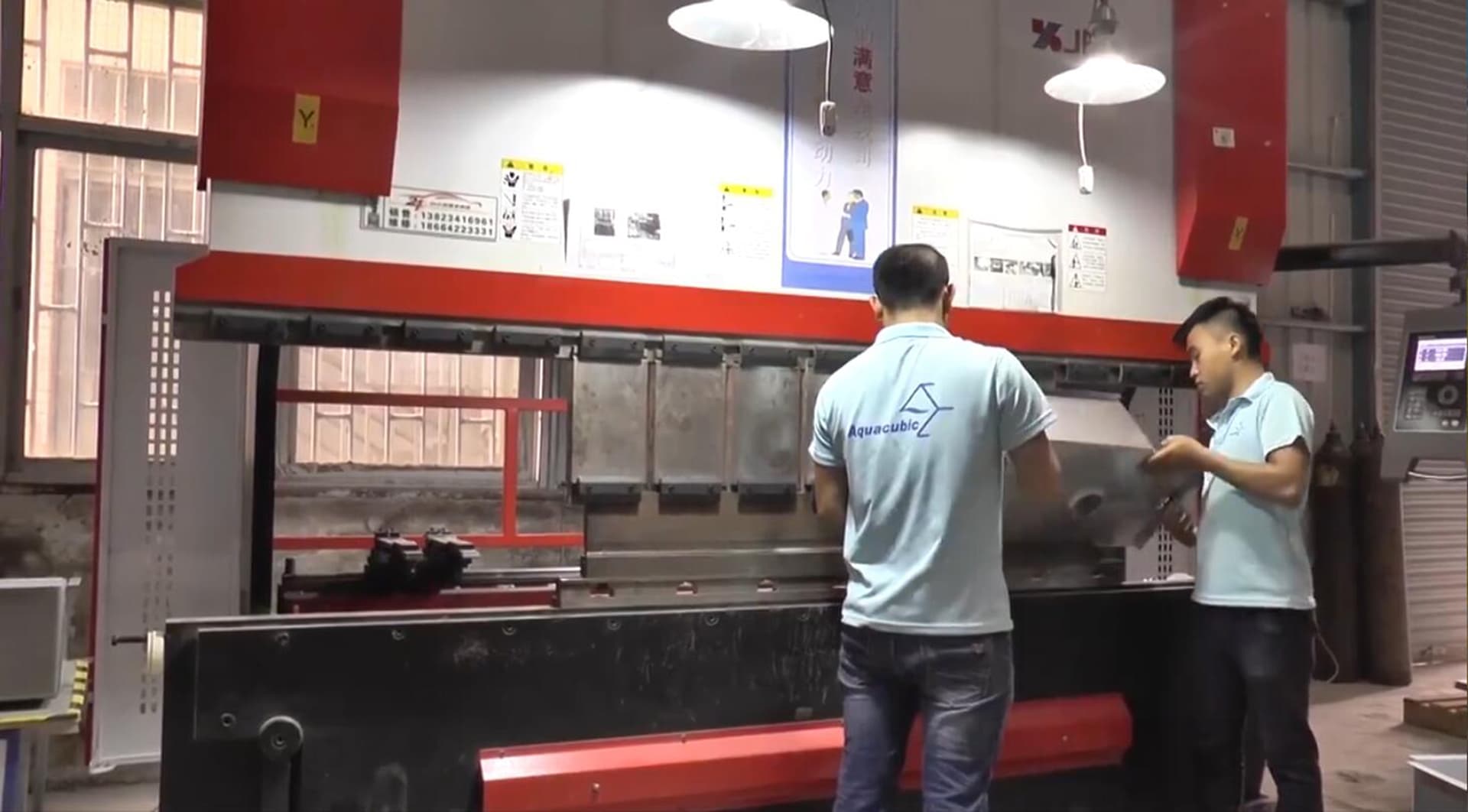
A handmade kitchen sink is manufactured through a combination of precision cutting, manual forming, TIG welding, and hand-finishing processes instead of a single stamping operation. Unlike mass-produced pressed sinks, handmade sinks are built using thicker stainless steel sheets and far more labor-intensive craftsmanship.
Most premium handmade sinks use:
16 gauge stainless steel sink construction (1.5mm)
18 gauge stainless steel (1.2mm) for lighter residential use
Commercial-grade SUS304 stainless steel
Precision TIG welding technology
The thicker steel structure provides superior rigidity and dent resistance, which is especially important in large workstation sink designs.
Another major advantage is customization flexibility. Handmade sink manufacturers can produce:
Custom sink dimensions
Extra-deep bowls
Tight-radius corners
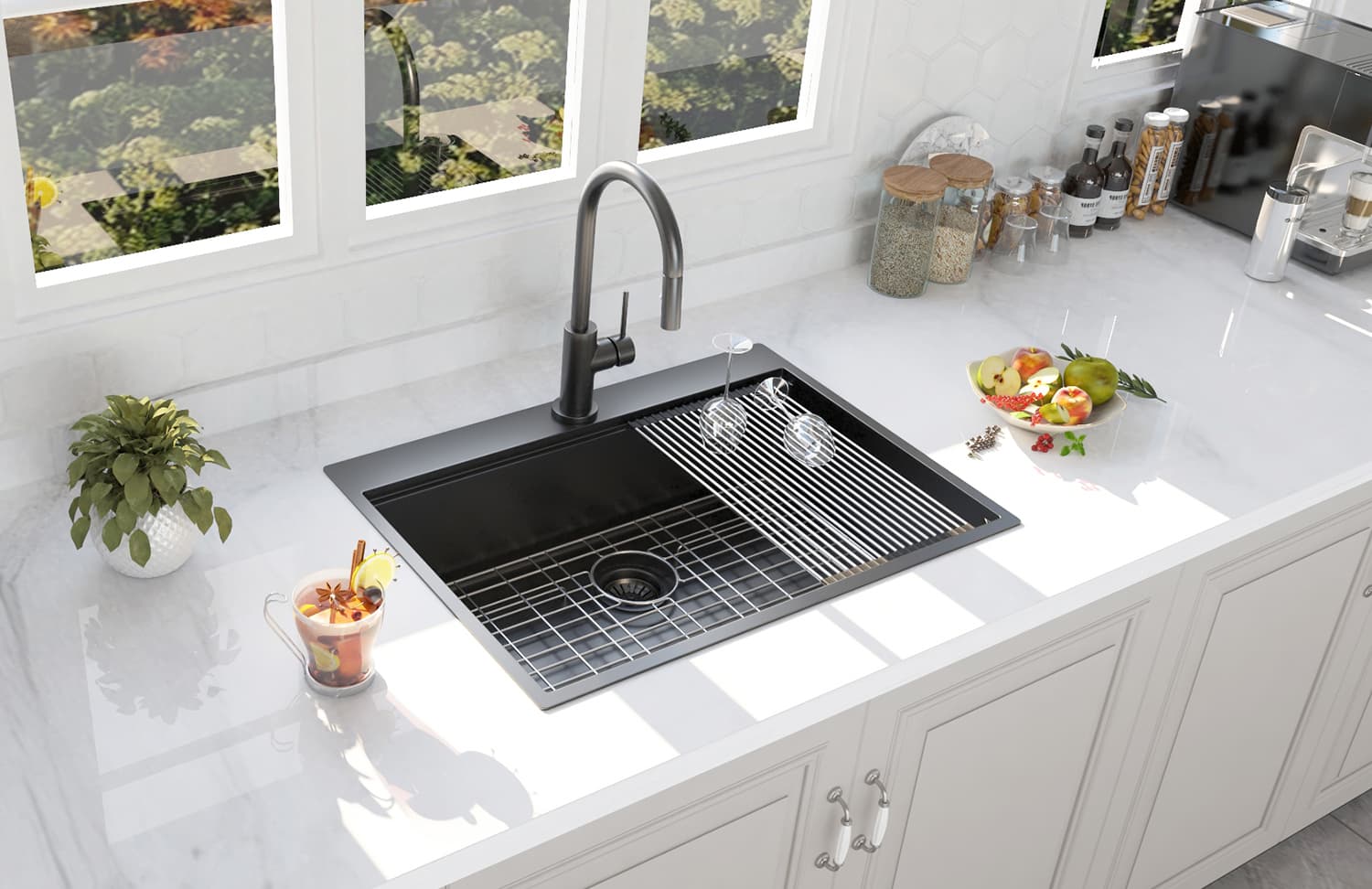
Integrated workstation ledges
Double bowl or offset bowl layouts
This level of flexibility is difficult or impossible for standard pressed sink production lines.
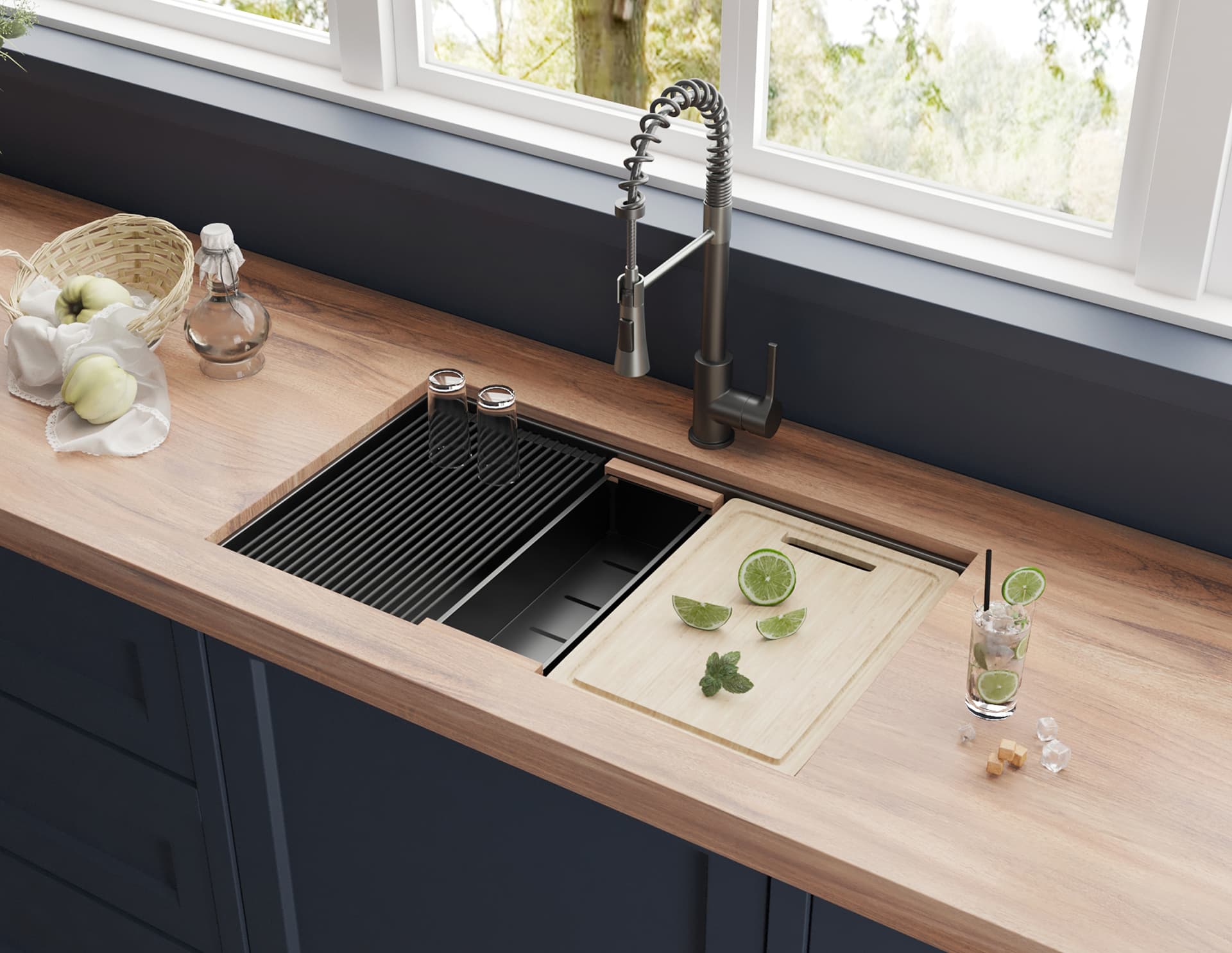
Many modern workstation sink manufacturers also integrate accessories such as:
Cutting boards
Colanders
Roll-up drying racks
Sliding prep platforms
These features have become extremely popular in North American kitchen remodels because they maximize countertop functionality without increasing kitchen size.
For additional technical information on sink standards and certifications, buyers often reference:
Suggested internal links:
Pressed stainless steel sinks are manufactured through a high-speed stamping process that shapes the sink bowl from a thin sheet of stainless steel using large hydraulic machines.
This production method is extremely efficient and cost-effective, which explains why pressed sinks dominate budget residential projects and apartment developments.
However, there are several limitations buyers should understand.
Most pressed sinks use:
20–22 gauge stainless steel
Thin steel sheets under 1mm
Larger bowl corner radii
Limited depth options
Minimal customization capability
Because the steel is thinner, pressed sinks are more prone to:
Denting
Vibrations
Noise during operation
Flexing under heavy cookware
Pressed sinks also typically feature larger rounded corners because sharp angles are difficult to achieve through mass stamping.
While these sinks work adequately for low-budget applications, they often lack the premium feel required in luxury kitchens or heavy-use commercial environments.
Aspect | Handmade Sink | Pressed Sink |
|---|---|---|
Material Gauge | 16–18 gauge (1.2–1.5mm) | 20–22 gauge (≤1mm) |
Durability | 20+ years, dent-resistant | 5–10 years, easier to dent |
Customization | Full customization available | Limited |
Noise Reduction | Excellent with sound pads | Louder during use |
Corner Radius | Tight modern corners | Large rounded corners |
Workstation Compatibility | Excellent | Limited |
Appearance | Premium commercial look | Standard residential look |
Price | Premium | Budget-friendly |
For most luxury residential and commercial projects, handmade sinks provide a significantly better long-term return on investment due to their durability and customization flexibility.
Not every project requires a premium handmade sink. However, certain environments benefit enormously from upgraded commercial-grade construction.
Custom homes increasingly use:
Black PVD sink finishes
Workstation sink systems
Large single bowl handmade sinks
Deep commercial-style basins
The cleaner lines and tighter corners of handmade sinks fit modern minimalist kitchen designs exceptionally well.
Restaurants, hotels, and hospitality projects often specify:
Commercial grade stainless steel sink systems
Heavy-duty 16 gauge construction
Deep bowls for cookware handling
Enhanced sound insulation
The stronger steel structure reduces maintenance costs and improves long-term durability.
Higher-end apartment developments increasingly use handmade sinks as a value-added feature because they improve perceived kitchen quality without dramatically increasing total project cost.
For importers, distributors, wholesalers, and OEM buyers, selecting the right manufacturing partner is just as important as selecting the sink itself.
A professional stainless steel sink factory in China should offer:
cUPC certification
SUS304 material traceability
Advanced TIG welding capability
Automated brushing and polishing lines
Stable production capacity
OEM customization support
Buyers should also verify:
Weld consistency
Corner finishing quality
Sound insulation systems
Surface brushing uniformity
Packaging standards for export shipping
Reliable factories should be able to provide:
Material test reports
Salt spray testing
Certification documentation
Production videos or factory audits
Useful external reference links:
Suggested internal links:
As the world’s largest & earliest PVD sink manufacturer, Aquacubic runs dual production bases in China & Thailand, with cUPC/CE/WaterSense certifications & OEM experience for US Fortune 500 brands.
Aquacubic is also a leading workstation sink manufacturer specializing in:
Custom handmade sink production
16 gauge stainless steel sink fabrication
Black PVD sink finishes
OEM & private label projects
Commercial grade stainless steel sink systems
Its vertically integrated manufacturing system allows tighter quality control over welding, brushing, PVD coating, and export compliance for North American wholesale and commercial projects.
For luxury residential kitchens, hospitality projects, and commercial applications, the handmade stainless steel sink has become the preferred solution across North America. Thicker steel, superior craftsmanship, better customization, and longer lifespan all contribute to stronger long-term value.
Pressed sinks still serve an important role in budget-conscious projects, but for buyers seeking premium quality, workstation functionality, and modern kitchen aesthetics, handmade sinks remain the clear winner.
Ultimately, the most important decision is not simply handmade vs pressed — it is choosing a reliable manufacturing partner capable of delivering consistent quality, certification compliance, and long-term supply stability.
Q1:Are handmade stainless steel sinks worth the higher price?
A:Yes. Handmade sinks use thicker stainless steel, stronger welding, and better sound insulation, making them more durable and longer lasting than pressed sinks in high-use kitchens.
Q2:Can handmade sinks be customized for workstation designs?
A:Absolutely. Most handmade sink manufacturers offer workstation ledges, custom dimensions, bowl depths, and accessory systems tailored for modern residential and commercial kitchens.
Q3:What gauge is best for a commercial-grade stainless steel sink?
A:16 gauge stainless steel is considered the premium standard for commercial-grade sinks because it offers excellent dent resistance, structural rigidity, and long-term durability.
Q4:Are handmade sinks quieter than pressed sinks?
A:Yes. Handmade sinks usually include sound-dampening pads and thicker steel construction, significantly reducing vibration and noise during dishwashing or heavy cookware use.
Q5:What certifications should buyers request from sink manufacturers?
A:B2B buyers should prioritize cUPC certification, SUS304 material reports, ISO quality systems, and corrosion testing to ensure compliance with North American market standards.