
Views: 0 Author: Site Editor Publish Time: 2025-12-18 Origin: Site
In hotel, resort, and serviced-apartment projects, commercial kitchens and back-of-house pantries operate under constant pressure. While sinks may appear to be standard components, failures such as corrosion, leakage, or structural deformation often result in operational downtime, hygiene risks, and unplanned replacement costs. For hospitality developers, designers, and procurement teams, sourcing high-quality commercial stainless steel sinks is not simply a purchasing decision—it is a long-term investment in durability, compliance, and workflow efficiency.

Professional buyers should evaluate sinks based on performance-driven specifications rather than unit price alone.
Material Grade
Type 304 stainless steel remains the industry benchmark for hospitality applications due to its superior corrosion resistance, food safety performance, and long service life. Lower grades such as 430 may reduce initial cost but often underperform in humid or high-usage environments.
Gauge and Structural Integrity
Gauge directly impacts durability. 16-gauge sinks offer higher impact resistance and reduced vibration compared to 18-gauge alternatives, especially in high-traffic kitchens. Advanced manufacturers increasingly adopt one-piece steel plate bending and full welding, ensuring uniform thickness and eliminating weak points found in mechanically stamped sinks.
Surface Finish
Commercial finishes such as satin brushed, straight-grain sand, or snowflake sand balance scratch resistance and cleanability. For premium projects, PVD nano coatings provide enhanced wear resistance and modern aesthetics while maintaining food-safe properties.
Configuration and Certification
Buyers should confirm compatibility with 1-, 2-, 3-, or 4-compartment layouts, integrated drainboards, and backsplashes. For North America, NSF certification is essential, while CUPC compliance supports plumbing system integration in regulated jurisdictions.

A reliable stainless steel kitchen sink factory must demonstrate transparent and repeatable inspection processes.
Raw Material Traceability
Material heat numbers and mill certificates verify stainless steel grade consistency and compliance.
Welding and Fabrication Inspection
Full-penetration welding, smooth corner transitions, and coved internal radii reduce bacterial buildup and structural fatigue. Weld seams should be visually inspected and mechanically stress-tested.
Surface Finish Measurement
Professional suppliers measure surface roughness (Ra values) to ensure cleanability and scratch resistance meet commercial standards.
Functional Testing
Leak tests, load tests, and drain flow verification confirm real-world performance before shipment—critical for hospitality projects with tight installation timelines.

Beyond technical specifications, procurement strategy plays a decisive role in project success.
OEM and ODM Capabilities
Hospitality projects often require customized bowl depths, leg structures, or drain placements. Working with an experienced OEM stainless steel sink manufacturer enables design flexibility without compromising compliance.
MOQ and Lead Time Management
Factories serving EU and US markets should offer scalable minimum order quantities and stable lead times aligned with project schedules, including export packaging and documentation readiness.
Logistics and Market Compliance
Understanding shipping methods, pallet standards, and certification labeling ensures smooth customs clearance and on-site delivery.

Commercial sinks must align with operational workflows, not just spatial constraints. Proper integration with prep zones, dishwashing lines, and waste systems improves efficiency and staff ergonomics. Features such as adjustable feet, reinforced legs, and modular drainboards allow sinks to adapt to diverse kitchen layouts—from resort banquet facilities to boutique hotel pantries.
Manufacturers with deep hospitality experience can collaborate with designers and contractors to ensure seamless integration across regions and standards.
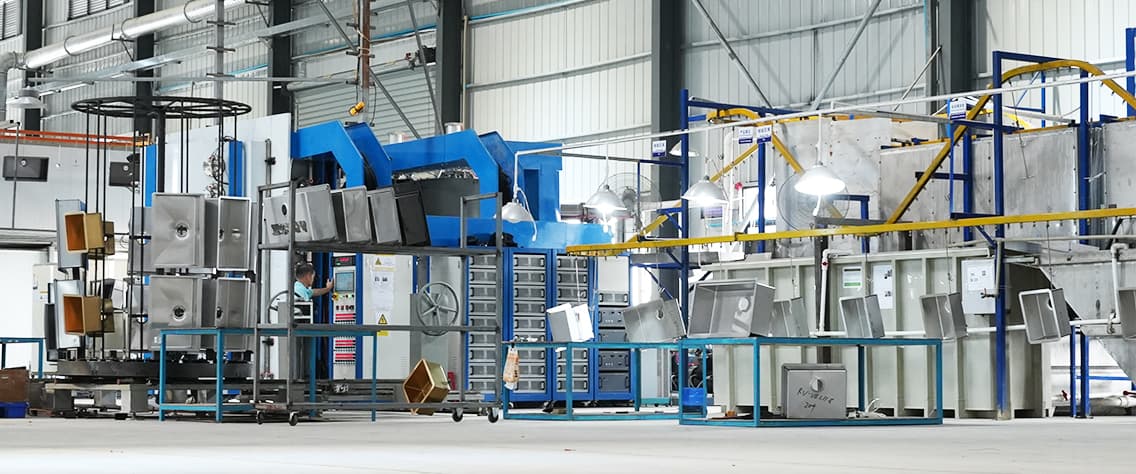
Selecting the right commercial stainless steel sink supplier minimizes lifecycle costs, protects hygiene compliance, and supports long-term operational reliability. Manufacturers capable of material control, rigorous inspection, and international certification—such as Aquacubic—are increasingly valued by hospitality buyers seeking consistency across multi-site projects. Ultimately, disciplined sourcing and inspection are not optional; they are essential to protecting ROI and project reputation.

1. Is 304 stainless steel always necessary for hospitality sinks?
Yes. For hotels and resorts, 304 stainless steel provides the corrosion resistance and hygiene performance required for long-term, high-frequency use.
2. Should I choose 16-gauge or 18-gauge sinks for commercial kitchens?
16-gauge sinks are recommended for heavy-duty hospitality environments due to their superior strength, reduced noise, and longer service life.
3. Are PVD-coated stainless steel sinks suitable for commercial use?
When properly applied, PVD nano coatings enhance wear resistance and aesthetics while maintaining food-safe performance.
4. What quality inspections should a reliable sink manufacturer provide?
Material traceability, welding inspection, surface roughness measurement, and functional leak testing are essential indicators of manufacturing quality.
5. Can a China sink manufacturer meet US and EU certification requirements?
Yes. Experienced factories with NSF, CUPC, and CE compliance systems can reliably supply certified products for North American and European markets.
6. How important is OEM/ODM capability for hospitality projects?
OEM/ODM flexibility allows sinks to be customized for workflow, layout, and branding needs—critical for large-scale or multi-property hospitality developments.


