Views: 0 Author: Site Editor Publish Time: 2025-12-16 Origin: Site
As hospitality, foodservice, and institutional renovation projects accelerate across North America and Europe, the performance expectations placed on commercial stainless steel sinks continue to rise. In modern kitchens—whether in hotels, restaurants, hospitals, or central food-processing facilities—sinks are no longer basic fixtures. They are critical infrastructure that must withstand constant use, aggressive cleaning chemicals, and strict health inspections.
For B2B buyers, specifying the right stainless steel grade, gauge, and surface finish at the planning stage directly impacts durability, lifecycle cost, and regulatory compliance. This article provides a clear, technical comparison of commercial sink materials and construction features to help buyers make informed sourcing decisions for 2026 and beyond.

Choosing the correct stainless steel grade is the foundation of sink performance, especially in food-contact and high-humidity environments.
Type 304 is the industry standard for NSF- and CUPC-certified kitchen sinks. With strong corrosion resistance and excellent hygiene performance, it is widely used in restaurants, hotels, and healthcare kitchens. Its high chromium and nickel content allows it to resist rust, staining, and chemical cleaners, making it ideal for food preparation zones.
Best for:
Commercial kitchens, foodservice facilities, hospitality projects
Certification compatibility: NSF / CUPC / CE
Type 316 contains molybdenum, offering enhanced resistance to chlorides and salt exposure. It is often specified for coastal environments, pharmaceutical kitchens, or facilities using harsh disinfectants.
Best for:
Marine environments, laboratories, high-corrosion zones
Consideration: Higher material cost
430 stainless steel is ferritic and nickel-free. While more affordable, it offers lower corrosion resistance and is typically unsuitable for food-contact areas requiring NSF certification.
Best for:
Utility areas, non-food-contact applications
Limitation: Not recommended for certified commercial kitchens

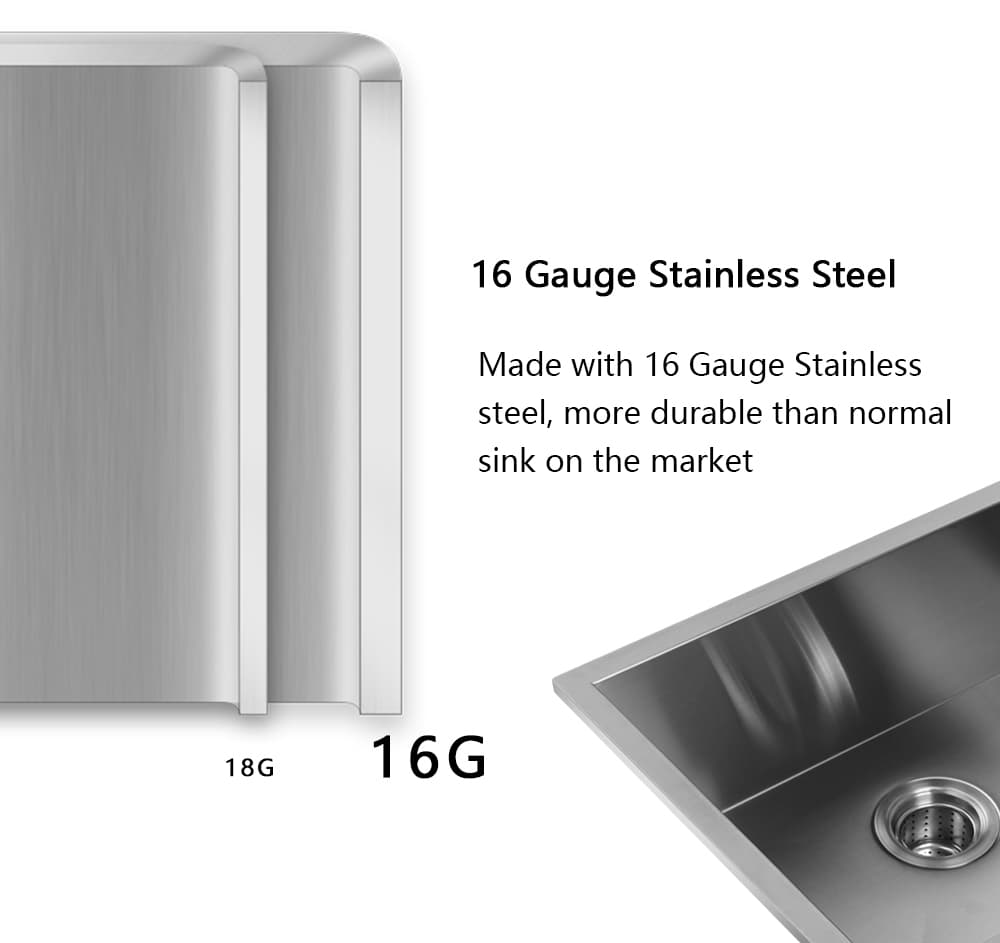
Gauge thickness directly affects durability and noise control.
16-gauge sinks provide superior dent resistance and structural rigidity, making them ideal for heavy-duty commercial use.
18-gauge sinks are lighter and more cost-effective, suitable for moderate-use environments.
For most restaurant kitchen sink projects, 16-gauge stainless steel is preferred due to its longer service life and lower replacement risk.
Satin / Brushed Finish: Reduces glare, hides scratches, and is easy to maintain—most common in commercial kitchens.
Mirror Finish: Aesthetic but impractical for heavy use due to visible fingerprints and wear.
Sound-Dampened Construction: Rubber pads or spray coatings applied beneath the bowl reduce operational noise, improving kitchen ergonomics.
Commercial kitchens often require more than a single bowl. Buyers should evaluate configuration and structural features carefully.
1-compartment: General washing
2-compartment: Wash & rinse
3-compartment: Wash, rinse, sanitize (health-code standard)
4-compartment: High-volume or specialized workflows
Integrated drainboards for workflow efficiency
Fully welded legs for stability
Adjustable feet for uneven floors
Coved corners and seamless welding to meet hygiene standards
These features are critical for passing inspections and improving long-term operational efficiency.

For B2B buyers, the supplier’s manufacturing capabilities are just as important as product specifications.
A professional stainless steel kitchen sink factory should demonstrate:
Verified raw material sourcing (mill test certificates)
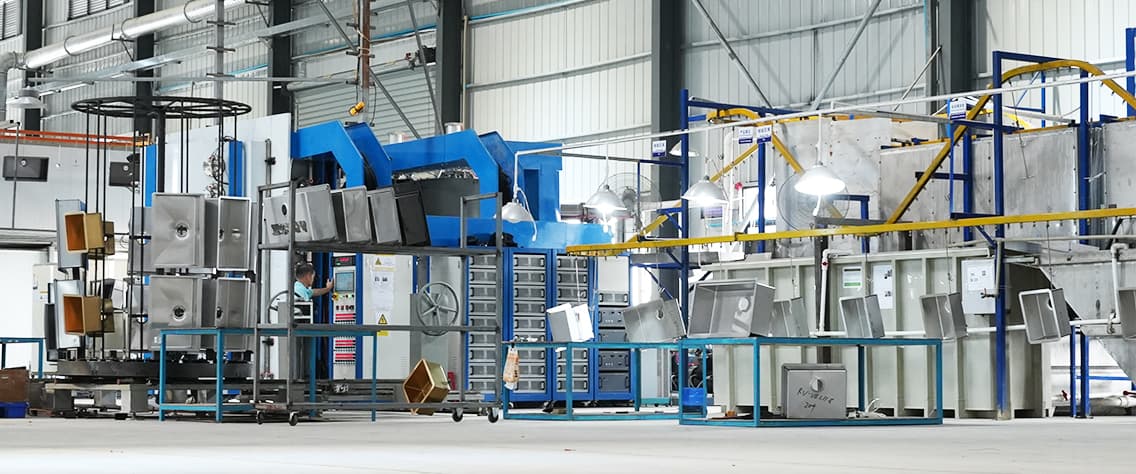
Automated welding and polishing lines
Internal corrosion and load testing
Support for NSF, CUPC, and CE-certified sink models
OEM and customization capabilities for dimensions, configurations, and branding
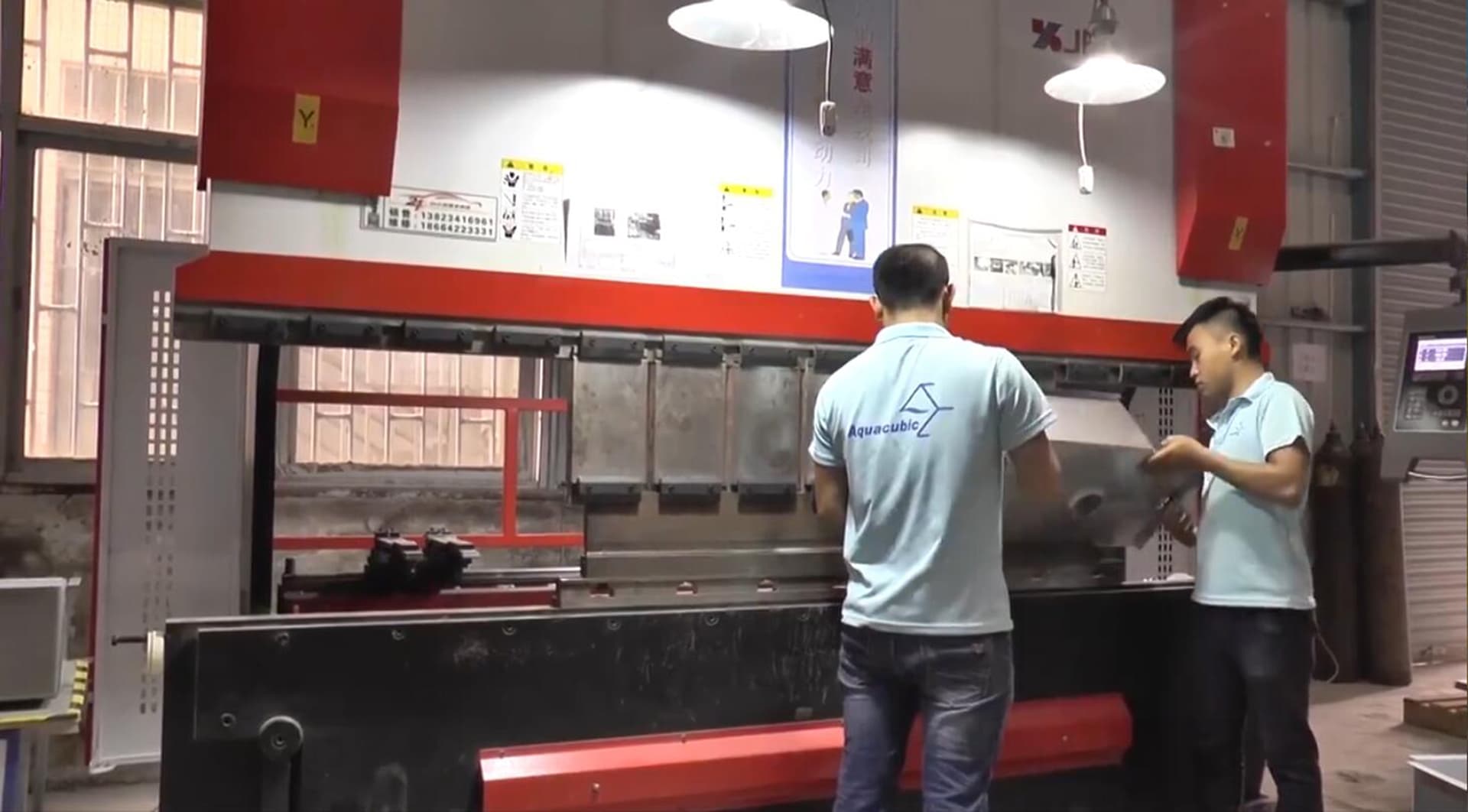
Manufacturers like Aquacubic, operating integrated production lines and serving international hospitality markets, align material selection, testing protocols, and certification requirements to meet global procurement standards—particularly for buyers sourcing at scale across Europe and North America.
Defining stainless steel sink specifications upfront—grade, gauge, finish, and functional configuration—helps buyers avoid premature failure, compliance issues, and unnecessary replacements. For large-scale hospitality and foodservice projects, selecting sinks from a certified, experienced OEM sink manufacturer ensures consistent quality, predictable performance, and lower total lifecycle costs.
As 2026 projects demand higher durability and stricter compliance, informed material benchmarking is no longer optional—it is a strategic procurement advantage.

Q1. Which stainless steel grade is recommended for NSF-certified commercial kitchen sinks?
A:Type 304 stainless steel is the industry standard for NSF-certified commercial sinks due to its excellent corrosion resistance, hygienic surface properties, and long-term durability in food-contact environments. Type 316 may be specified for coastal or high-chemical applications, while 430 stainless steel is generally unsuitable for certified commercial kitchens.
Q2. Is a 16-gauge stainless steel sink significantly better than an 18-gauge sink for commercial use?
A:Yes. A 16-gauge sink offers greater structural rigidity, improved dent resistance, and longer service life, making it ideal for high-traffic commercial kitchens. While 18-gauge sinks may be acceptable for light-duty use, most professional buyers specify 16-gauge for restaurants, hotels, and institutional kitchens.
Q3. What sink features are essential for passing commercial kitchen inspections?
A:Key features include seamless welded construction, coved internal corners, NSF-compliant materials, proper drainboard integration, and stable support structures such as welded legs with adjustable feet. These elements help meet sanitation codes and simplify cleaning and maintenance.
Q4. How can I verify that a sink manufacturer truly meets NSF, CUPC, or CE standards?
A:Buyers should request valid certification documents, listing numbers from recognized bodies (such as NSF or IAPMO), and evidence of ongoing factory audits. Reputable manufacturers also provide material traceability records and testing reports to demonstrate continued compliance.
Q5. What manufacturing capabilities should I prioritize when selecting an OEM sink supplier?
A:Key capabilities include automated welding and polishing, strict raw material inspection, in-house testing for load and corrosion resistance, and experience producing sinks for international hospitality or foodservice projects. OEM customization support and certification-ready designs are also critical for large-scale procurement.
Q6. How does working with an experienced stainless steel sink factory reduce procurement risk?
A:An experienced manufacturer understands regional certification requirements, maintains consistent production standards, and can deliver repeatable quality across large orders. This reduces the risk of compliance failures, installation delays, and costly product replacements in multi-location projects.