Views: 0 Author: Site Editor Publish Time: 2026-06-16 Origin: Site
Over the past five years, North American importers, distributors, and private-label brands have learned a valuable lesson: supply chain stability matters just as much as product quality.
Tariff fluctuations, rising logistics costs, geopolitical uncertainties, and changing sourcing regulations have forced buyers to rethink traditional procurement strategies. Relying on a single manufacturing location—even one with world-class production capabilities—can create unnecessary risks.
For buyers sourcing stainless steel kitchen sinks, handmade stainless steel sinks, and PVD kitchen sinks, two common concerns frequently emerge. Can Chinese factories maintain competitive pricing amid evolving trade policies? Can Southeast Asian factories provide sufficient production capacity and technical expertise?
Increasingly, the answer lies in a hybrid manufacturing model.
A supplier operating production facilities in both China and Thailand can combine the strengths of each location while reducing supply chain vulnerabilities. This dual-factory strategy offers buyers greater flexibility, improved lead-time management, diversified tariff exposure, and stronger business continuity.
For North American brands seeking long-term sourcing partners rather than short-term suppliers, manufacturing diversification has evolved from a strategic advantage into a practical necessity.
Despite ongoing discussions about supply chain diversification, China continues to dominate global stainless steel sink production.
The reasons are straightforward: scale, technical expertise, and manufacturing efficiency.
China's sink manufacturing ecosystem has developed over decades, creating extensive networks of raw material suppliers, tooling specialists, automation providers, and logistics partners. This mature industrial infrastructure enables manufacturers to respond quickly to market demands and accelerate product development cycles.
For premium products such as PVD coated kitchen sinks, China's advantages are particularly significant.
Many of the world's largest PVD coating facilities are located in China, supported by extensive experience in vacuum deposition technology, precision welding, and automated surface finishing. Manufacturers can rapidly develop new finishes, customize sink configurations, and scale production without compromising consistency.
Key advantages of sourcing from a stainless steel sink factory in China include:
Advanced PVD coating capabilities
Faster new product development
Strong R&D and engineering resources
Competitive production costs
Efficient tooling and prototyping
Extensive supplier networks
For buyers focused on innovation, customization, and premium finishes, China remains an indispensable manufacturing hub.
While China continues to lead in technical expertise, Thailand has emerged as an increasingly important manufacturing destination for North American buyers.
Thailand's strategic location within Southeast Asia, combined with a stable manufacturing workforce and expanding industrial infrastructure, makes it an attractive option for export-oriented production.
One of Thailand's most significant advantages is supply chain diversification.
By producing in Thailand, manufacturers can reduce exposure to certain trade policy changes and create more flexible sourcing strategies for customers. This flexibility has become particularly valuable for buyers seeking to manage tariff risks and optimize total landed costs.
Thailand also offers several operational benefits:
Competitive labor costs
Favorable manufacturing environment
Growing export infrastructure
Reduced supply chain concentration risk
Shorter transit routes to some global markets
For high-volume production programs with predictable demand, a Thailand sink manufacturer can provide reliable capacity while supporting broader sourcing strategies.
Choosing between China and Thailand is no longer the only option.
The most resilient sourcing strategy combines both.
A dual factory sink supplier can allocate production according to each factory's strengths, creating a more agile and reliable supply chain.
For example:
New product development and complex PVD projects can be managed in China.
High-volume production can be balanced across both facilities.
Capacity constraints can be addressed by shifting orders between factories.
Buyers can diversify sourcing without managing multiple supplier relationships.
This approach offers several benefits for North American importers:
Supply Chain Challenge | Dual Factory Solution |
Tariff uncertainty | Diversified production locations |
Capacity limitations | Flexible manufacturing allocation |
Extended lead times | Multiple production schedules |
Demand fluctuations | Scalable production planning |
Supply disruptions | Business continuity support |
For distributors and retailers, this flexibility translates into fewer stockouts, improved forecasting accuracy, and more reliable customer service.
In an increasingly unpredictable global market, supply chain resilience has become a measurable competitive advantage.
One of the most common misconceptions about dual-country manufacturing is that products made in different locations vary in quality.
A well-managed manufacturing network should eliminate these inconsistencies.
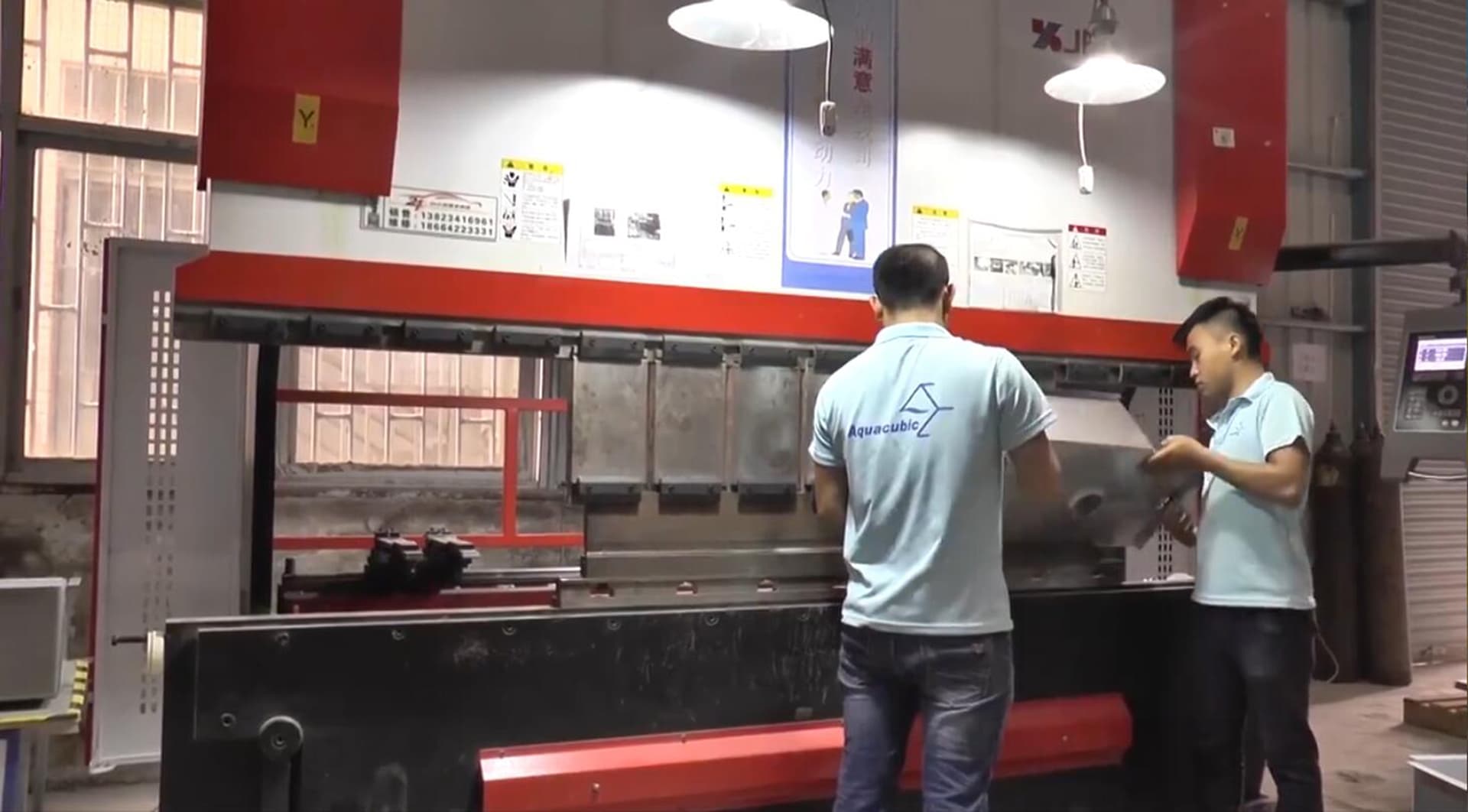
Leading sink manufacturers implement standardized operating procedures across all production facilities to ensure uniform quality regardless of production location.
Buyers should verify that suppliers maintain consistency in:
SUS304 stainless steel specifications
Material thickness and gauge
PVD coating parameters
Welding processes
Surface finishing standards
Packaging requirements
Quality inspection procedures
Certifications also play a critical role.
North American buyers should prioritize cUPC certified sinks that comply with relevant plumbing requirements.
Recommended external resources:
Anchor text: cUPC certification requirements
Anchor text: physical vapor deposition technology
Anchor text: advanced wear-resistant coatings
Consistent quality depends less on geography and more on process control.
Experienced procurement teams understand that the lowest factory price rarely delivers the best long-term value.
A more comprehensive evaluation considers factors such as:
Production capacity
Lead-time reliability
Inventory support
Packaging quality
Engineering capabilities
Certification compliance
After-sales service
Aquacubic has built its global production network around these priorities.
Operating dual manufacturing bases in China and Thailand, the company develops sourcing solutions designed to help brand partners reduce costs while maintaining quality consistency and supply security.
More than 300,000 customers have selected Aquacubic PVD sinks over the years, providing valuable insights into evolving market preferences and installation requirements.
To support North American customers, Aquacubic maintains U.S.-based warehouse resources that improve inventory flexibility and shorten delivery timelines.
The company also emphasizes installation-friendly product design and retail-ready packaging, helping distributors reduce damage rates, simplify installation, and improve local market performance.
Rather than focusing exclusively on initial purchase price, Aquacubic aims to maximize long-term value through stable production, efficient logistics, and customer-focused product development.
Anchor text: handmade stainless steel sink manufacturing guide
Anchor text: undermount kitchen sink installation guide
Anchor text: commercial kitchen sink project portfolio
For North American buyers, the debate is no longer "China or Thailand."
The smarter question is: which suppliers can leverage both manufacturing ecosystems effectively?
China continues to offer unmatched expertise in product development, PVD technology, and supply chain integration. Thailand provides valuable diversification, production flexibility, and additional sourcing options.
Together, these capabilities create a more resilient supply chain—one that balances cost, quality, lead time, and risk.
As global sourcing becomes increasingly complex, buyers who partner with dual-factory manufacturers gain a meaningful advantage in an evolving marketplace.
Q1、Are sinks manufactured in Thailand lower quality than those made in China?
A:Not necessarily. Quality depends on standardized materials, production processes, and quality control systems rather than factory location. Well-managed dual-factory suppliers maintain consistent specifications across both facilities.
Q2、How does dual-factory production improve lead times?
A:Dual production bases allow manufacturers to shift capacity between facilities, reduce bottlenecks, and respond more quickly to changing demand, helping buyers maintain stable inventory levels.
Q3、Can PVD sinks manufactured in different countries have consistent colors?
A:Yes. Consistent PVD finishes require standardized coating parameters, material specifications, and quality inspections. Reputable manufacturers ensure color consistency across all production locations.
Q4、What certifications should North American buyers require?
A:Buyers should prioritize cUPC-certified sinks and verify additional certifications relevant to their market, including CE and WaterSense requirements when applicable.
Q5、Is a dual-factory supplier more expensive than a single-factory supplier?
A:Not necessarily. Dual-factory production can optimize total landed costs by improving logistics efficiency, reducing supply chain risk, and offering greater sourcing flexibility.