Views: 0 Author: Site Editor Publish Time: 2026-06-18 Origin: Site
Standard sink sizes work well for standard kitchens. The challenge is that today's residential and commercial projects are anything but standard.
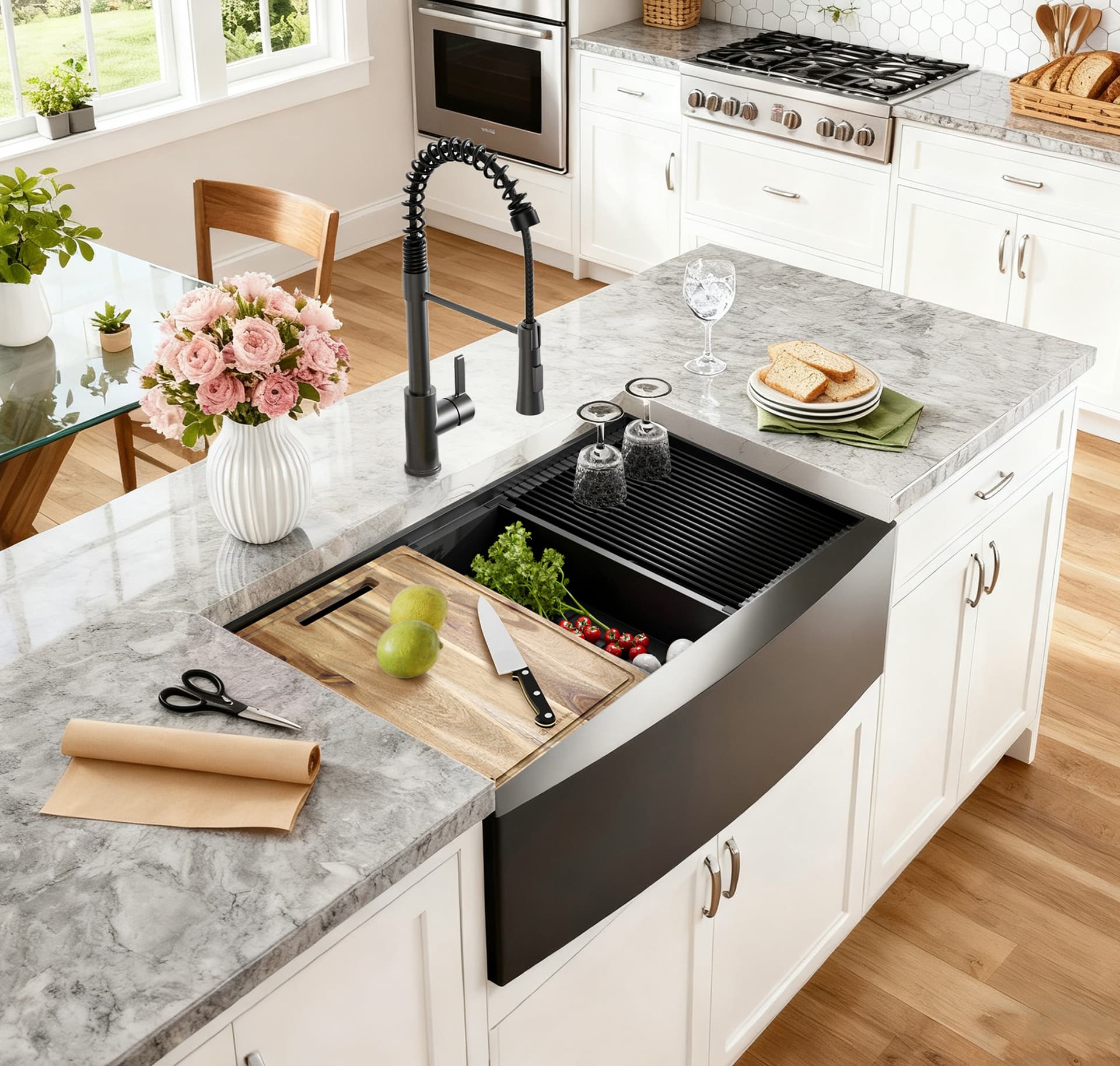
From oversized kitchen islands and luxury condominiums to boutique hotels and multi-family developments, designers and builders increasingly require solutions that balance aesthetics, functionality, and space efficiency. As a result, the demand for custom handmade sinks, custom workstation sinks, and premium PVD kitchen sinks continues to grow across the United States and Canada.
Industry trends show that homeowners are investing more heavily in kitchen upgrades than any other area of the home. According to the latest insights from the annual kitchen trends report by the National Kitchen & Bath Association (NKBA), larger sinks, multifunctional workstations, and premium finishes remain top priorities for kitchen renovations.
External link anchor text:
kitchen trends report — https://nkba.org/research/2025-kitchen-trends-report/
For project developers and private-label brands, customization offers a clear competitive advantage. Unique sink dimensions, tailored finishes, specialized accessories, and brand-specific packaging create differentiation in an increasingly crowded market.
However, customization also requires a more structured procurement process. Success depends not only on product design but also on selecting the right manufacturing partner.
Modern sink manufacturing offers far more flexibility than many buyers realize.
Today's leading OEM sink manufacturers can customize virtually every aspect of a sink to align with project requirements, installation conditions, and target market preferences.
Common customization options include:
Overall dimensions: 30–60 inches and beyond
Bowl depth: 8–14 inches
Corner radius: R0, R10, R15, or R20
Installation type: undermount, top mount, flush mount, farmhouse
Drain placement and accessories
Integrated workstation ledges
PVD colors, including black, gunmetal, gold, copper, and rose gold
Logo engraving and private labeling
Retail packaging and installation kits
For North American projects, customization increasingly focuses on deeper bowls, workstation accessories, and premium finishes that improve both functionality and visual appeal.
Growing consumer demand for multifunctional kitchens has accelerated interest in workstation sink design concepts.
External link anchor text:
A successful custom sink project starts long before production begins.
Experienced buyers follow a structured procurement framework to minimize risk and ensure project success.
Clarify your target market, project requirements, price range, certifications, and delivery schedule.
Key considerations include:
Residential or commercial use
Distribution channel
Installation type
Target retail price
Required certifications
Annual purchasing volume
Evaluate multiple manufacturers rather than requesting quotations from a single source.
Prioritize suppliers with:
Experience in North American markets
cUPC certification capabilities
OEM and ODM expertise
Established quality management systems
Manufacturing facilities in multiple regions
Provide detailed specifications covering:
Material grade (SUS304 or SUS316)
Thickness (16 gauge or 18 gauge)
Surface finish
Packaging requirements
Accessory configurations
Branding requirements
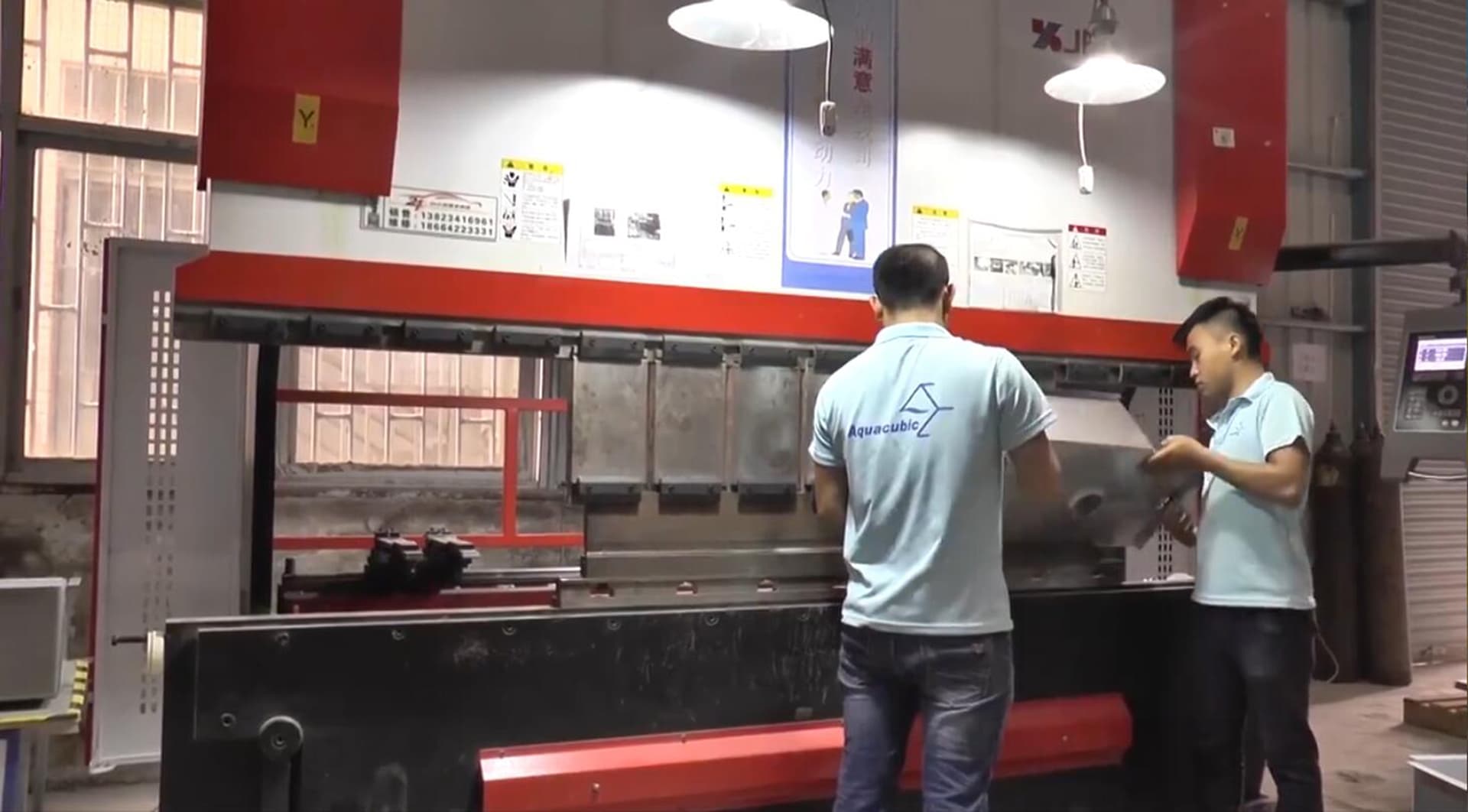
Virtual factory tours and on-site inspections remain essential.
Review production capabilities, testing procedures, and quality systems before proceeding.
Evaluate samples for:
Welding quality
Surface consistency
Noise reduction performance
Packaging protection
Installation experience
Establish clear acceptance criteria before mass production begins.
Conduct third-party inspections to verify product quality, packaging integrity, and shipment accuracy.
After receiving the goods, review installation feedback, defect rates, and customer satisfaction data to support future purchasing decisions.
The most successful sourcing relationships evolve into strategic partnerships rather than transactional purchases.
Material selection directly influences sink durability, performance, and customer satisfaction.
For most North American applications, SUS304 stainless steel remains the preferred choice because it balances corrosion resistance, affordability, and long-term reliability.
Premium commercial environments or coastal applications may benefit from SUS316 stainless steel due to its enhanced resistance to chloride exposure.
Thickness also matters.
A 16 gauge stainless steel sink (approximately 1.5 mm) offers superior dent resistance and acoustic performance compared with thinner alternatives.
For high-end residential projects and commercial installations, 16 gauge construction is widely regarded as the premium standard.
PVD technology adds another layer of customization and durability.
Unlike painted finishes, Physical Vapor Deposition creates a molecular-level bond with the stainless steel substrate, improving scratch resistance and color retention.
For buyers unfamiliar with the technology, the following resource provides a useful overview of physical vapor deposition coatings:
External link anchor text:
Aspect | Custom Sink | Standard Sink |
Design Flexibility | Fully customized | Fixed specifications |
Brand Differentiation | Excellent | Limited |
Lead Time | 4–6 weeks | 2–3 weeks |
Tooling Requirements | Possible | None |
Unit Cost | 15–30% higher | Lower |
Installation Fit | Optimized | Standardized |
Best Applications | Luxury homes, hospitality, multifamily projects | Production housing, stock inventory |
While custom sinks involve higher initial costs, they often create stronger margins by increasing perceived value and reducing installation compromises.
For private-label brands and developers, customization can become a meaningful competitive advantage.
Not all manufacturers possess the capabilities required for custom production.
When evaluating a handmade sink factory, buyers should look beyond pricing and consider the supplier's ability to support the entire product lifecycle.
Critical evaluation criteria include:
Engineering and design support
Rapid prototyping capabilities
Certification expertise
Production capacity
Multi-country manufacturing options
Quality assurance systems
Packaging design capabilities
After-sales support
North American buyers should verify compliance with applicable standards through recognized certification programs.
External link anchor text:
cUPC certification program — https://iapmo.org/certifications/cupc
In addition, suppliers should demonstrate a clear understanding of local installation practices and consumer preferences.
Successful sourcing partnerships extend far beyond factory production.
Aquacubic operates manufacturing facilities in both China and Thailand, helping customers diversify sourcing strategies while balancing quality, lead times, and cost efficiency.
More than 300,000 customers worldwide have selected Aquacubic PVD sinks, providing valuable market insights that inform product design, packaging optimization, and installation improvements.
The company maintains U.S.-based warehouse resources to support inventory flexibility and accelerate delivery timelines for North American customers.
Aquacubic also focuses on installer-friendly designs and retail-ready packaging, helping distributors reduce damage rates, simplify installation, and improve sell-through performance.
Rather than competing solely on the lowest price, the company emphasizes total value—combining reliable supply, localized service, and manufacturing expertise to support long-term growth for brand partners.
Recommended Internal Resources
How to choose the best kitchen sink manufacturer
Custom sinks are no longer niche products reserved for luxury projects.
They have become essential tools for designers, builders, and private-label brands seeking to differentiate their offerings and improve user experiences.
The key to successful customization lies in combining thoughtful design with disciplined sourcing practices.
By defining clear procurement objectives, validating supplier capabilities, and building partnerships with experienced manufacturers, North American buyers can reduce risk while creating products that deliver long-term value.
In an increasingly competitive market, the right manufacturing partner does more than produce sinks—they help build stronger brands.
Q1、What is the typical minimum order quantity for custom stainless steel sinks?
A:Minimum order quantities vary by design complexity and customization level. Most OEM projects require 50–200 units, while fully customized molds or packaging may require higher volumes.
Q2、How long does custom sink production usually take?
A:Custom sink projects typically require four to six weeks, including design confirmation, sample approval, production, and quality inspections. Complex projects may require additional time.
Q3、Are custom PVD sinks more expensive than standard stainless steel sinks?
A:Yes. Custom PVD sinks generally cost 15–30% more due to specialized finishes, engineering support, and lower production volumes, but they often generate higher retail margins.
Q4、Which certifications should North American buyers request?
A:Buyers should prioritize cUPC certification and confirm compliance with local plumbing requirements. Commercial projects may require additional certifications depending on installation conditions.
Q5、Should I source from manufacturers with factories in multiple countries?
A:Multi-country manufacturing can improve supply chain flexibility, reduce sourcing risks, and provide better capacity management during periods of market volatility.